How to Tell If Your Home Needs New Insulation for Comfort and Savings

Homeowners can identify the need for new spray foam insulation by monitoring specific indicators such as fluctuating indoor temperatures, steadily increasing energy bills, and physical signs like drafts or pest intrusion. If the heating and cooling system runs constantly yet fails to maintain a stable environment, it typically signals that the thermal barrier is compromised or insufficient. Addressing these deficiencies restores the building envelope, resulting in a stable indoor climate and reduced operational costs.
Recognizing the symptoms of failing insulation is the first step toward creating a more energy-efficient living environment. While some signs are obvious, such as a drafty hallway, others are subtle and accumulate over time, like slowly rising utility costs. Industry experts utilize these visual and physical cues to diagnose thermal weaknesses and recommend specific upgrades that align with modern building standards.
Recognizing Temperature Fluctuations and Drafts
One of the most immediate indicators of poor insulation is the inability to maintain a consistent temperature throughout the house. A well-insulated home should hold a uniform temperature across all rooms, regardless of the weather outside. When insulation fails, the external environment begins to dictate the internal climate, leading to noticeable discomfort.
The Hot and Cold Room Phenomenon
In multi-story homes, a common sign of insulation failure is a significant temperature difference between floors. Heat naturally rises, but effective attic insulation prevents it from accumulating in the upper levels. When the thermal barrier is weak, the upstairs becomes stiflingly hot in the summer while the downstairs remains cool.
Similarly, specific rooms that jut out from the main structure, such as those above a garage, often become “problem rooms.” If a resident walks from the hallway into a bedroom and feels an immediate temperature drop or rise, it indicates that the insulation in the walls or ceiling is inadequate or missing entirely.
Identifying Draft Sources
Drafts are not just a nuisance; they are a clear sign that uncontrolled air is moving through the building envelope. If residents feel a breeze near closed windows, electrical outlets, or baseboards, it means outside air is infiltrating the home. This air movement undermines the work of the HVAC system and indicates that the current insulation is not providing the necessary air seal.
Bonus Tip: The Candle Test
To confirm the presence of drafts, a homeowner can light a candle or stick of incense and hold it near window frames, outlets, and baseboards on a windy day. If the smoke stream moves horizontally or flickers wildly, there is a significant air leak that requires attention.

Analyzing Energy Costs and Equipment Performance
A steady increase in energy costs, unrelated to rate hikes or extreme weather, often points to insulation failure. As insulation ages, materials like fiberglass can settle or sag, leaving gaps in the walls and attic. These gaps create thermal bridges where heat transfers freely, forcing the HVAC unit to cycle on and off more frequently.
The Cost of Inefficiency
Market data suggests that heating and cooling account for approximately 50% of the average home’s energy usage. When insulation performance drops, this percentage increases significantly. Monitoring monthly bills year-over-year provides a reliable baseline for detecting efficiency losses. If the usage (kilowatt-hours) is higher than the same month in the previous year without a change in habits, the insulation is likely the culprit.
Short-Cycling Systems
If the air conditioner or heater turns on and off constantly — known as short-cycling — it may be struggling to maintain the set temperature due to rapid heat loss or gain. This excessive cycling wears down the mechanical components and drives up electricity consumption. Proper insulation stabilizes the indoor environment, allowing the system to run in longer, more efficient cycles.
Visual and Physical Inspections of the Attic
Visual inspection of the attic or crawl space often reveals the condition of the insulation. Fiberglass batts that appear flat, compressed, or dusty have lost their R-value. Insulation works by trapping air pockets; when the material is crushed, those pockets disappear, and the insulating power vanishes.
Assessing Insulation Depth and Condition
A quick look across the attic floor can tell a lot. If the insulation level is level with or below the floor joists, the home likely needs more material. Current building standards typically recommend levels well above the joists to prevent thermal bridging through the wood. Additionally, if the insulation looks uneven or has valleys, it suggests settling or disturbance.
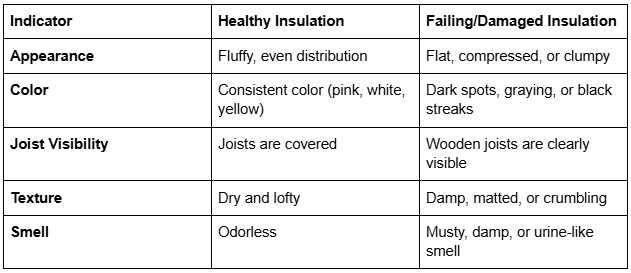
Signs of Failure vs. Healthy Insulation
The following table helps homeowners distinguish between insulation that is functioning correctly and material that needs replacement.
Moisture Issues and Pest Intrusions
Insulation that has been exposed to water is permanently damaged. Wet insulation clumps together and creates a breeding ground for mold. In humid climates, moisture that penetrates the walls can condense on the insulation, leading to a musty smell indoors. Any sign of mold on the ceiling or walls warrants an immediate inspection of the insulation behind the surface.
Humidity Control in Warm Climates
For homes in warm, humid regions like South Florida, insulation serves a dual purpose: blocking heat and controlling moisture. Standard insulation does not stop humidity from entering the home. If the indoor air feels clammy or sticky despite the air conditioner running, it often indicates that moisture-laden outdoor air is leaking into the house.
Spray foam insulation is particularly effective in these environments because it acts as an air barrier. It stops the infiltration of humid air, reducing the latent load on the HVAC system. Homeowners in these areas should look for signs of sweating ducts or rust on attic nails, which indicate high humidity levels that existing insulation is failing to manage.
Bonus Tip: Check for Pests
Rodents and insects often view traditional fiberglass and cellulose insulation as ideal nesting materials. If there is evidence of droppings, tunnels, or shredded material in the attic, the insulation is compromised. Pests not only displace the material but also leave behind waste that impacts indoor air quality.

Things to Consider Before Making a Decision
Before scheduling a replacement, property owners should evaluate the scope of the project. Simply adding new insulation on top of old, damaged material is rarely effective. If the existing material is wet or contaminated by pests, it must be removed completely to prevent trapping odors and rot.
Homeowners must also consider the type of material that best suits their needs. While fiberglass is cheaper, it does not seal air leaks. Spray foam costs more upfront but provides both insulation and air sealing in one step. A professional energy audit can identify the specific areas of heat loss and help prioritize which sections of the home need immediate attention.
Ventilation Requirements
Upgrading insulation tightens the building envelope. This improves efficiency but changes how the house breathes. When installing high-performance insulation, it is often necessary to review the home’s ventilation strategy to ensure fresh air exchange continues without compromising energy savings.
Questions People Ask About Insulation Replacement
How often should home insulation be replaced?
Fiberglass and cellulose typically last 15 to 20 years before settling or degrading affects performance. However, if moisture or pests damage it, it must be replaced immediately. Spray foam insulation is considered permanent and lasts for the life of the building.
Can I just add new insulation over the old stuff?
You can add new material over old fiberglass if the existing layer is dry and pest-free. However, if the old insulation is wet, moldy, or compressed, it should be removed to ensure the new layer performs effectively.
Will new insulation really lower my energy bills?
Yes, upgrading to modern insulation standards can reduce heating and cooling costs by 15% to 50%, depending on the condition of the old material and the severity of air leaks.
How do I know if I have enough insulation in my attic?
A quick visual check is usually sufficient. If the insulation level is level with or below the floor joists, you likely need more. Modern standards typically recommend R-38 to R-60 for attics, which equates to 10–18 inches of depth depending on the material.
Does insulation help with noise?
Yes, insulation dampens sound. If you can clearly hear outside noise like traffic or neighbors, it is a sign that your walls lack sufficient insulation or have significant air gaps.
Conclusion
Recognizing the signs of failing insulation allows homeowners to address comfort and efficiency issues before they lead to costly repairs. Whether it is uneven room temperatures, rising utility bills, or visible damage in the attic, these indicators point to a compromised thermal barrier. Replacing old material with modern solutions like spray foam not only stabilizes the indoor environment but also protects the structure from moisture and pests. Evaluating these signs early ensures a healthier, more cost-effective home for years to come.
Contact for Professional Assistance
For residents noticing these warning signs, All in Overhall offers comprehensive insulation inspections and upgrades. They specialize in identifying thermal weaknesses and installing high-performance solutions designed to maximize comfort and savings.
Interested individuals can contact the company at (561) 406–3835 to schedule a home evaluation. For detailed inquiries or to request a service quote, emails can be sent to info@allinoverhall.com.
Author: Richard Hall founded ALL IN OVERHALL, Your Local Spray Foam Insulation Company in Jupiter, FL, on January 3, 2022, to offer honest and reliable insulation services across South Florida. He focuses on clear communication and careful workmanship to improve comfort and reduce energy costs. His team helps homeowners and businesses create spaces that stay cooler and more efficient year-round.
Reviewer: Lucas Mitchell has 6 years of experience in spray foam insulation. He reviewed this article and helped refine the ideas to strengthen the brand’s presence and reach homeowners seeking reliable insulation.


Comments
Post a Comment